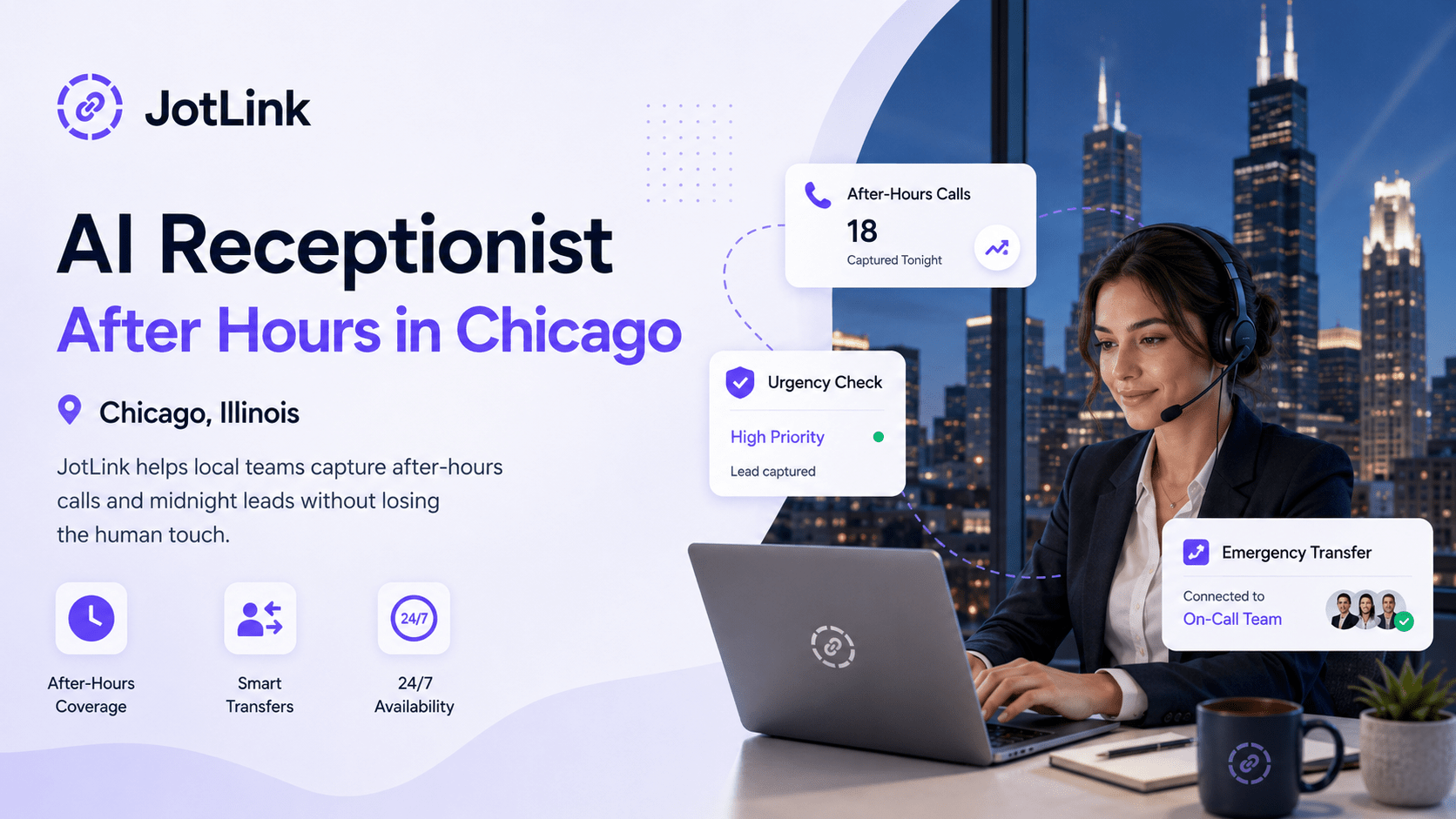
After-hours calls are where the cheapest wins hide: the callers are real, the intent is high, and today most of them reach voicemail. An AI receptionist turns the closed-hours window into working hours — answering, booking, triaging emergencies, and queuing qualified follow-ups for the morning. Here are seven workflows to set up.
1. Answer instead of voicemail
The baseline workflow: after closing, calls route to the AI receptionist instead of a mailbox. Callers get their question answered — hours, availability, pricing basics — in the moment they cared enough to call.
2. Book appointments while you sleep
Connected to your calendar, the AI offers real open slots and confirms bookings at midnight as easily as at noon. For appointment businesses this is the single highest-value after-hours workflow — details in AI appointment automation.
3. Triage genuine emergencies to a human
Define emergency triggers up front: specific words, caller statements, or menu choices that transfer immediately to an on-call phone. Everything else is handled or queued. The AI’s job is not to gate emergencies — it is to make sure the on-call person is woken only for real ones.
4. Capture and qualify leads, not just messages
An evening caller asking about prices is a lead. Instead of “please call back tomorrow,” the AI captures the need, asks qualifying questions, and files a scored lead into your CRM via AI lead qualification — so the morning follow-up list is prioritized before anyone arrives.
5. Promise a callback — and schedule it
When a caller needs a human, the AI books the callback into a rep’s calendar for the next business morning and texts the caller a confirmation. The difference between “we’ll get back to you” and a confirmed 9:15 slot is the difference between a lost lead and a kept one.
6. Answer in the caller’s language
Night lines serve travelers, shift workers, and multilingual neighborhoods. AI answering with built-in translation means the 11 p.m. caller in Spanish or French gets served instead of hanging up on an English-only voicemail.
7. Deliver a morning summary your team actually reads
Each morning, the team should open one digest: how many calls came in overnight, what was booked, which leads are hot, what needs a callback. With AI call analytics, transcripts and summaries generate automatically — no one listens to voicemail queues.
Rolling it out
After-hours is the ideal first deployment for an AI receptionist: the calls are currently unanswered, so the AI competes with voicemail, not with your staff. Run it for two weeks, count the captured bookings and leads, then decide about daytime overflow. AI voice runs $5 per 100 minutes with JotLink — for most small businesses the after-hours volume costs less than a lunch.
See how JotLink handles after-hours calls or book a demo to configure your night flow.